

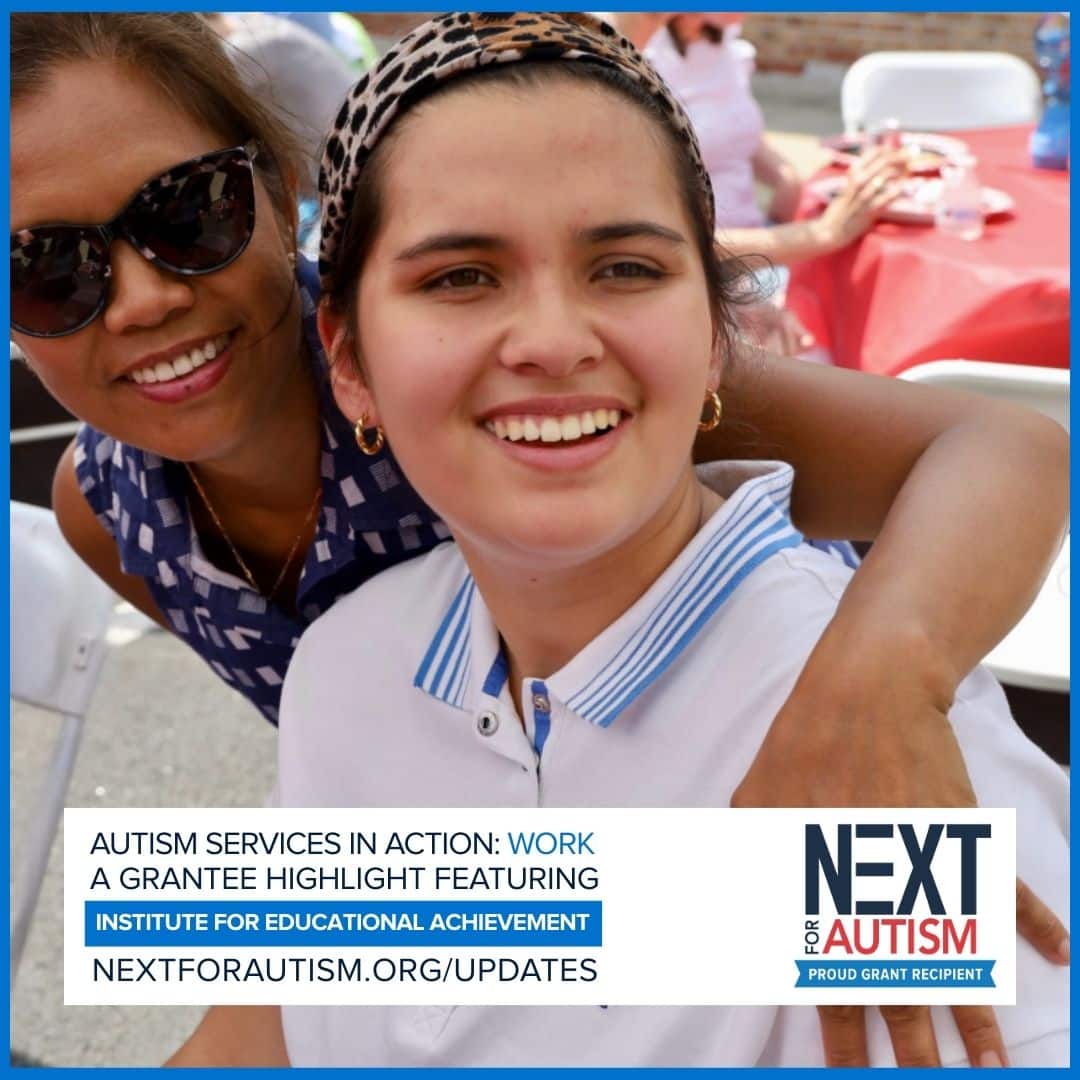
Autism Services in Action
A DAY IN THE LIFE
Every day at the Institute for Educational Achievement (IEA) begins with purpose.
For the autistic adults who attend IEA's Adult Life Skills Program (ALSP) in New Milford, New Jersey, that purpose has a name: independence. Some are heading to jobs they've held for over a decade. Others are practicing the skills that will get them there. All of them are supported by a team trained with precision and care.
With support from NEXT for AUTISM, IEA is strengthening the training infrastructure that makes this possible, ensuring that every direct support professional (DSP) is equipped to help each autistic adult reach their full potential.
WHAT THE PROGRAM PROVIDES
IEA's Adult Life Skills Program is built on scientifically validated teaching practices. For nearly 30 years, the organization has served autistic individuals by tailoring programming to each person's strengths, needs, and goals.
Funding from NEXT for AUTISM supports the Trainer role in the program, a critical, advanced-skill position not covered by New Jersey's Division of Developmental Disabilities (DDD). The Trainer works directly with DSPs to build their clinical repertoires, ensuring that every adult in the program benefits from consistent, high-quality intervention across all areas of life, including:
- Daily living and household tasks
- Communication and social interaction
- Vocational skill development and job retention
- Community participation and recreational activities
- Self-management and self-advocacy
THE RESULTS
- Adults served: 13 autistic individuals
- Population: 100% at or below the poverty line; 18% non-speaking
THE IMPACT
- All DSPs passed their annual evaluations and returned for another year
- IEA passed its DDD audit, inspectors praised the program's individualization and client rights practices
- An independent external evaluator reviewed the data and deemed the program "very effective"
- More than half of IEA's autistic adults are gainfully employed, some with the same employer for over a decade
These aren't just metrics. They represent autistic adults who clock in every morning, contribute to their teams, and come home knowing they matter.
BUILDING A MODEL OF EXCELLENCE
IEA doesn't keep its practices to itself. The organization shares its work through program tours, conference presentations, and published research, helping to disseminate effective, ethical approaches to adult autism services across the field.
The "Train the Trainer" model at the heart of IEA's program creates systems of accountability that outlast any single staff member. When a Trainer leaves, their successors are already prepared. When new adults enter the program, and more are expected in the coming years, the infrastructure is ready.
WHY THIS MATTERS
Workforce development is often invisible in autism services. Families see outcomes. They see their loved one holding a job, making friends, or navigating a grocery store with confidence. What they don't see is the hours of training behind those moments.
NEXT for AUTISM's investment in IEA is an investment in that invisible infrastructure, the skilled professionals who show up each day to ensure autistic adults don't just survive in their communities but thrive in them.
For the adults at IEA, independence isn't a distant goal. It's something they're building, one supported step at a time.




Leave a Reply