

Autism Services in Action
Finding a Patch Forward
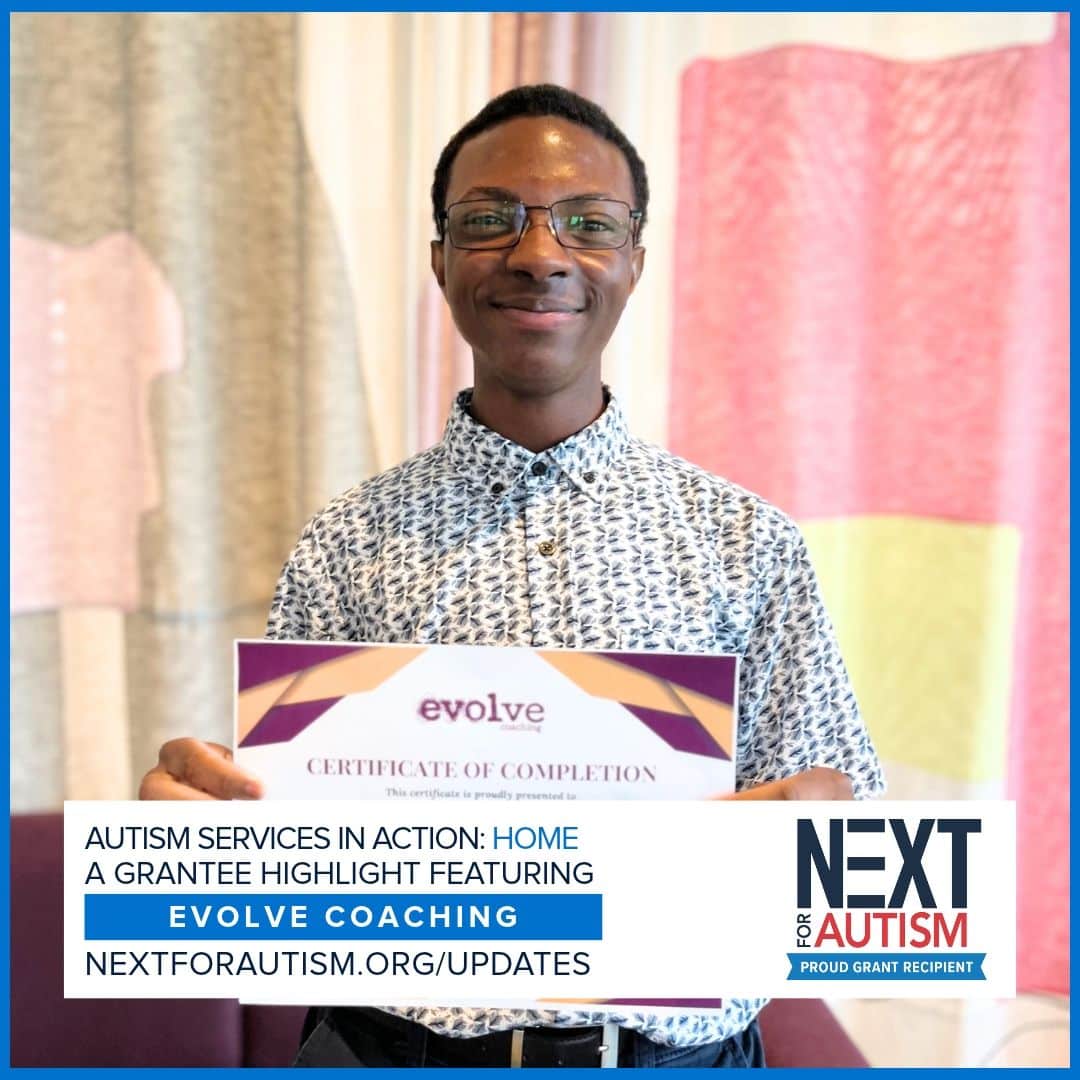
Before the training, he didn’t have a clear employment direction. He wasn’t sure what kind of work he could do, or who would take a chance on him. His references were all family members; a reality that quietly signals something about the narrowness of many autistic adults’ professional networks.
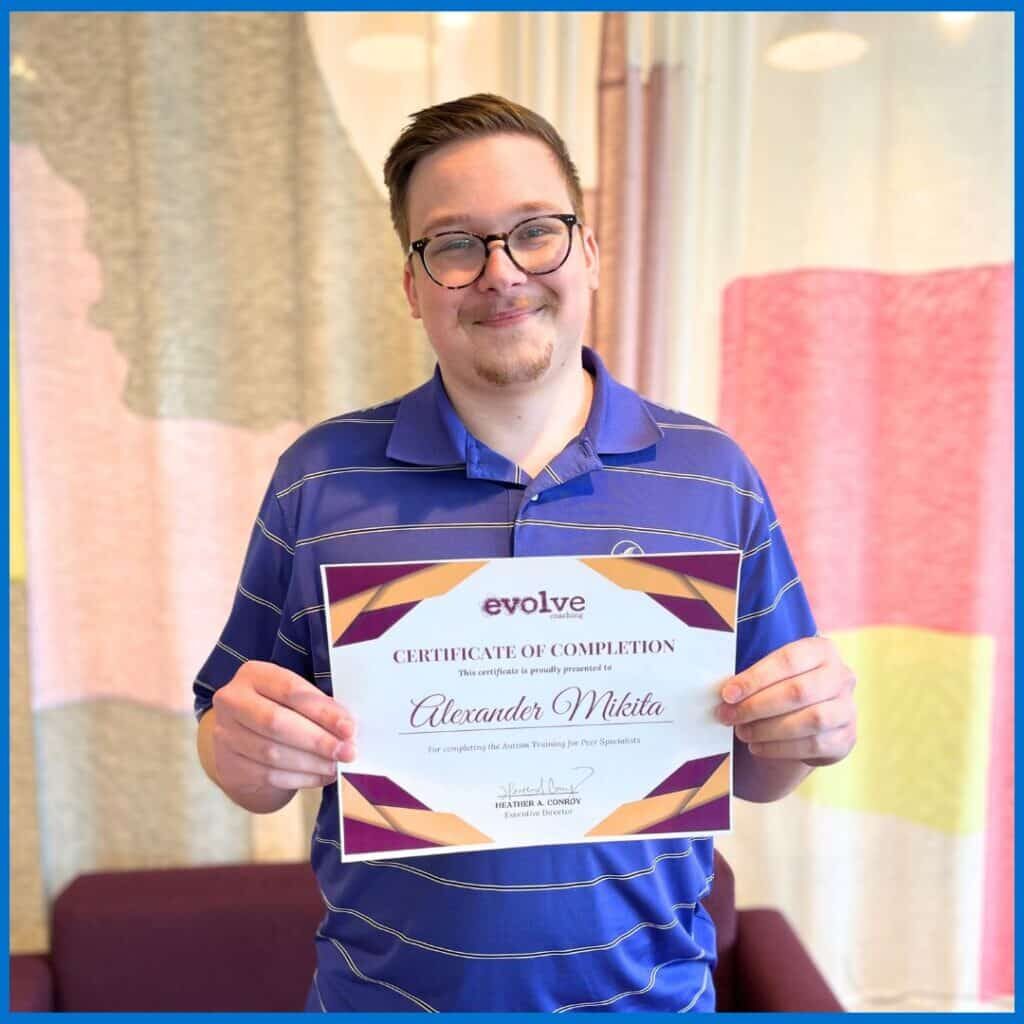
Then he became one of four autistic peer specialist trainees at Evolve Coaching in Pittsburgh. Over three weeks of intensive training, something shifted. He found not just a skill set, but a direction. He is now scheduling his Certified Peer Specialist exam, has reached out to professional references from the training program, and is actively pursuing positions in the field.
He also took another step and educated the county’s mental health trainers about what effective peer support looks like for autistic people. Speaking from lived experience, as someone who uses those services himself, they listened and made changes. His confidence grew visibly as a result.
“Forty autistic people offered their input in a safe space where they reported feeling seen, heard, and valued… Their guidance in building a curriculum that can be made accessible to all types of learners was invaluable.”
Evolve Coaching, 2025
What Evolve Coaching Built
For nearly a decade, Evolve Coaching had fielded the same request from autistic adults in Pittsburgh: help us learn to live independently. There was no program in the region to refer them to. With support from NEXT for AUTISM, Evolve spent 2024–2025 building one from the ground up, and they built it the right way, starting with the community itself.
Rather than relying on clinicians to decide what autistic adults need, Evolve centered community voice from the start. They convened paid focus groups, virtual sessions, one-on-one interviews, and surveys, making the process accessible to as many people as possible, including one parent who participated to represent her non-speaking adult child. Input from participants shaped everything: content, format, safety protocols, and how materials would be delivered and generalized across environments.
The resulting curriculum covers:
- Financial literacy and avoiding scams
- Community and relationship building, including dating
- Household management: cleaning, schedules, expectations, and living with roommates
- Sensory needs, including noise mitigation
- Self-advocacy
The curriculum will launch at Evolve’s new Inclusion Center in mid-2026—a purpose-built space designed with autistic community members to address sound, visual, physical, and sensory accessibility—complete with a full kitchen, bathroom, and laundry facilities for hands-on, real-world practice.
Program Reach
During the 2024–2025 grant year, 40 autistic adults participated in shaping the curriculum; through focus groups, surveys, and interviews. Four of those participants went further, completing 95 hours of peer specialist training and earning certification from both the county’s mental health training program and Evolve’s own autism-specific curriculum. Each trainee received $1,700 for their time.
What the Grant Made Possible
All three grant outcomes were met:
- A minimum of 40 paid autistic focus group members and self-reporters participated, meeting the target exactly
- A complete pilot-year curriculum and satisfaction and success measure were developed, ready for implementation
- Four autistic peer specialists were trained and certified—all four are interested in working in the field, and two are completing clearance requirements to begin part-time work with Evolve
A notable unexpected outcome: the peer specialist trainees gained significant social capital through the process, professional connections, references outside their family networks, and county-level recognition as credible voices in autistic peer support. Evolve is now in relationship with Allegheny County peer specialist leaders who are championing their approach and helping them explore Medicaid billing as a path to sustainability.
Why This Matters
Eighty-one percent of Evolve’s autistic adult clients have never lived independently. That number reflects a gap that has existed for years, not because autistic adults don’t want independence, but because the supports to help them build it have rarely existed.
What Evolve built is different not just because it fills that gap, but because of how it was built: by listening first, paying people for their expertise, and putting autistic adults in the room not just as subjects of a curriculum, but as its architects.
The Inclusion Center opens in 2026. The curriculum is ready. The peer specialists are trained. Pittsburgh’s autistic community built this, and Pittsburgh’s autistic community will lead it.




Leave a Reply