

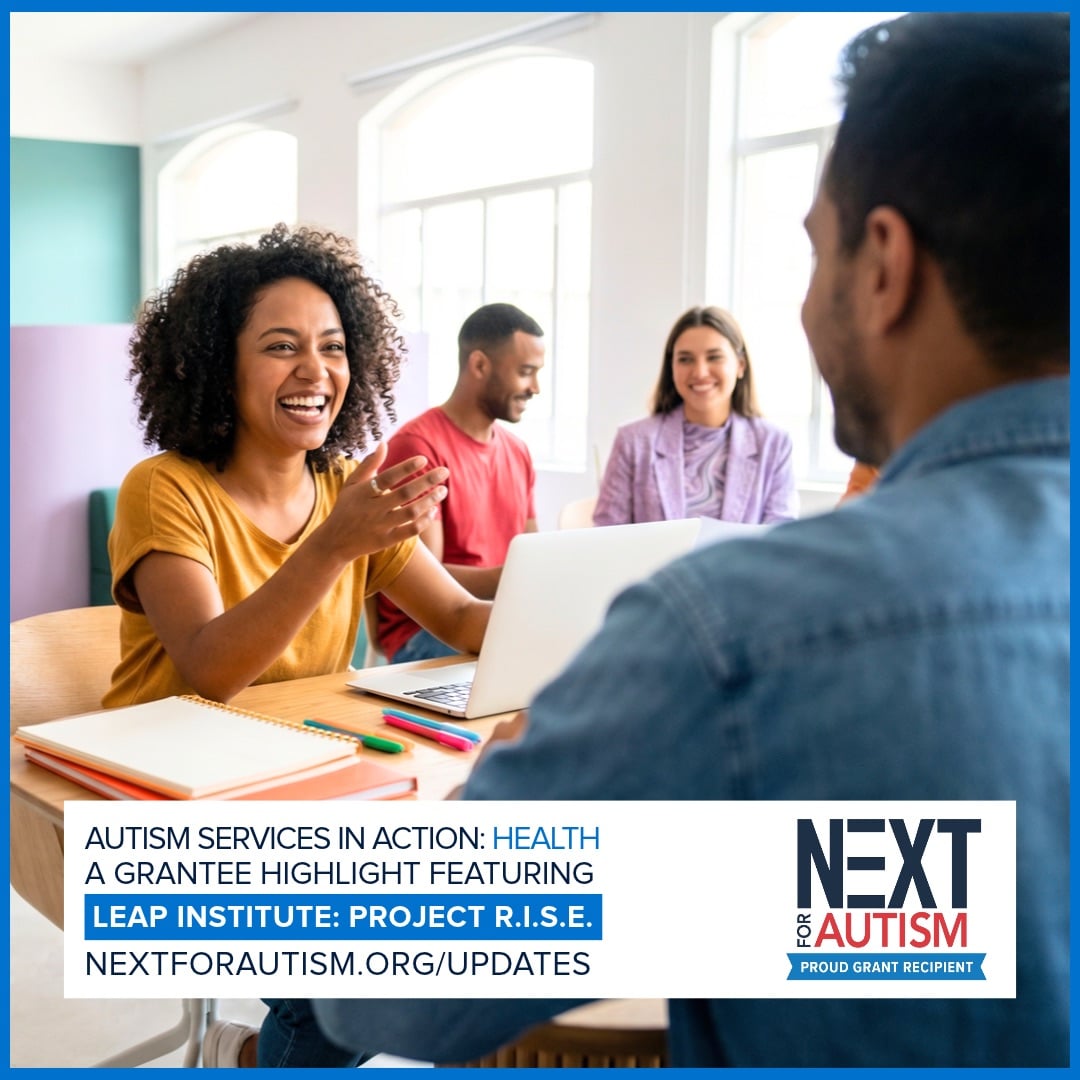
Autism Services in Action
A New Direction
Before Project R.I.S.E., José* didn’t have a clear path forward. He was interested in behavioral health, but the barriers to entry were real: unpaid training, certification costs, and a field not designed with people like him in mind. After completing the LEAP Institute’s training program, José earned his peer specialist certification and is now pursuing RBT (registered behavioral technician) positions, using professional references from the program instead of family members for the first time. His story is one of 25 from Project R.I.S.E.’s first year.
*Pseudonym
“78.2% of clients served through the program are now receiving care from an RBT who shares their cultural background or neurodivergent identity.”
Project R.I.S.E. EOY Report, 2026
What Project R.I.S.E. Provides
Project R.I.S.E. (Represent, Include, Support & Empower) is a workforce training program founded and led by Dr. Mari Cerda, an Indigenous Autistic woman and Board Certified Behavior Analyst. Through the LEAP Institute and its clinic arm, Lighthouse Learning Center, the program creates paid pathways into behavioral health careers for neurodivergent and BIPOC adults in Lubbock, Texas.
Project R.I.S.E. goes far beyond the 40-hour industry standard for RBT training. Each participant receives 60–120 hours of paid, individualized preparation covering:
- Trauma-responsive care and assent-based practices
- Cultural safety and person-centered ethics
- RBT exam preparation with accommodation support and covered testing costs
- Mentor matching and individualized job coaching
- 30-, 60-, and 90-day follow-up supports after employment
Program Reach
In its first year, Project R.I.S.E. trained 25 participants, meeting its projected goal of 24–30. Participants averaged 100 hours of training, more than double the industry standard. At enrollment, 77% reported being financially unstable or underemployed; 25% were first-generation college students.
- 76% identified as neurodivergent or Autistic
- 44% identified as BIPOC
- 64% were at or below the poverty line
- 88% were matched with a mentor
Why This Matters
There is an opportunity to build a behavioral health workforce that more closely reflects the communities it serves. Supporting greater community representation among care providers can help make care more responsive to the needs and experiences of the people receiving it.
Project R.I.S.E. addresses that directly. By training and employing neurodivergent and BIPOC adults as RBTs, LEAP is building a workforce that looks like the families it serves. By the end of the grant year, 78.2% of clients at participating clinics were receiving care from an RBT who shared their cultural background or neurodivergent identity.
That’s not a side effect of equity-centered workforce development. That’s the point.





Leave a Reply